Reading Options
These options change this article. You can also use your browser’s zoom.
GAMES · 6 MIN READ
How Random Results Work in Casino-Style Games
By Wren Brightstar Random Game Results
Quick Answers
- RNG means random number generator: a system that creates values a game uses to choose results.
- When results are independent and odds stay the same, a streak does not change the next result’s chances.
- Some game features keep progress from earlier rounds. Read the game’s rules to see how those features work.
From Wren’s Navigation Notes
The Pattern I Wanted to Find
During a navigation exercise, I used a fresh scan to plot a clear route through the region. At the next check, several objects had drifted. The open path had moved, but my route was still pointing toward its former location.
The sensible response was to discard the route and plot another. Instead, I searched the new readings for a pattern that would preserve my first answer. A crewmate eventually asked whether I was studying the data or trying to win an argument with it. The distinction was accurate and therefore unwelcome.
A run of game results can invite the same mistake. When results are independent, the history records where you have been; it does not map where the next result will land. Understanding why begins with separating the parts of the system.
What Does RNG Mean?
RNG means random number generator. It creates bits or number values. The game uses them with its rules to choose events, then shows you the result. [1]
The number system, game math and screen have different jobs. A spinning symbol is the display, not the RNG itself.
| Part | What it does |
|---|---|
| Seed | Starting data used to set up a generator. |
| Internal state | Data the software keeps and updates as it runs. |
| Output | The values the generator sends to the next step. |
| Mapping | Turns the values into game events with the intended odds. |
| Game math | Sets how events, results and features work. |
| Display | Shows the result on screen. |
These are general parts of random-result systems. This table does not describe the private code of a specific Win Bonanza game.
Can Software Make Random Numbers?
Many systems use a pseudorandom number generator, or PRNG. It follows a math process. With the same full starting data and later inputs, it can produce the same sequence again. [2]
That does not mean a player can work out its next value from a few game symbols. The screen does not show all the data inside the system.
A sound design protects that data and sets up the generator with care. Some systems add fresh seed data later. This is called reseeding. [2]
NIST’s SP 800-90 guides explain these parts. They cover the math process, sources of uncertainty and ways to combine them. “Entropy” is a measure of uncertainty. It does not just mean that a sequence looks messy. [3] [4]
Software and physical sources can make random data in different ways. An animation alone will not tell you which one a game uses.

How Do Numbers Turn into Results?
Here is a made-up example. Imagine ten labels, each with the same chance of being picked. Give seven labels to event A and three to event B.
Event A now has a 70% chance. Event B has a 30% chance. The labels have equal odds. The two events do not.
This example explains mapping. It is not the odds of any real game. Real games may use many more values and several steps to choose a result.
Mapping must keep the intended odds as values change into events. A good RNG cannot fix a mistake in that later step. [1]
How a Result Reaches the Screen
-
Generate
The random number generator produces a value.
-
Apply the Game Math
The game’s math turns that value into an event.
-
Show the Result
The screen shows the event under the game’s rules.
This is a simple teaching example. The exact system and feature steps vary by game.
Wren’s Field Note
Keep the Layers Apart
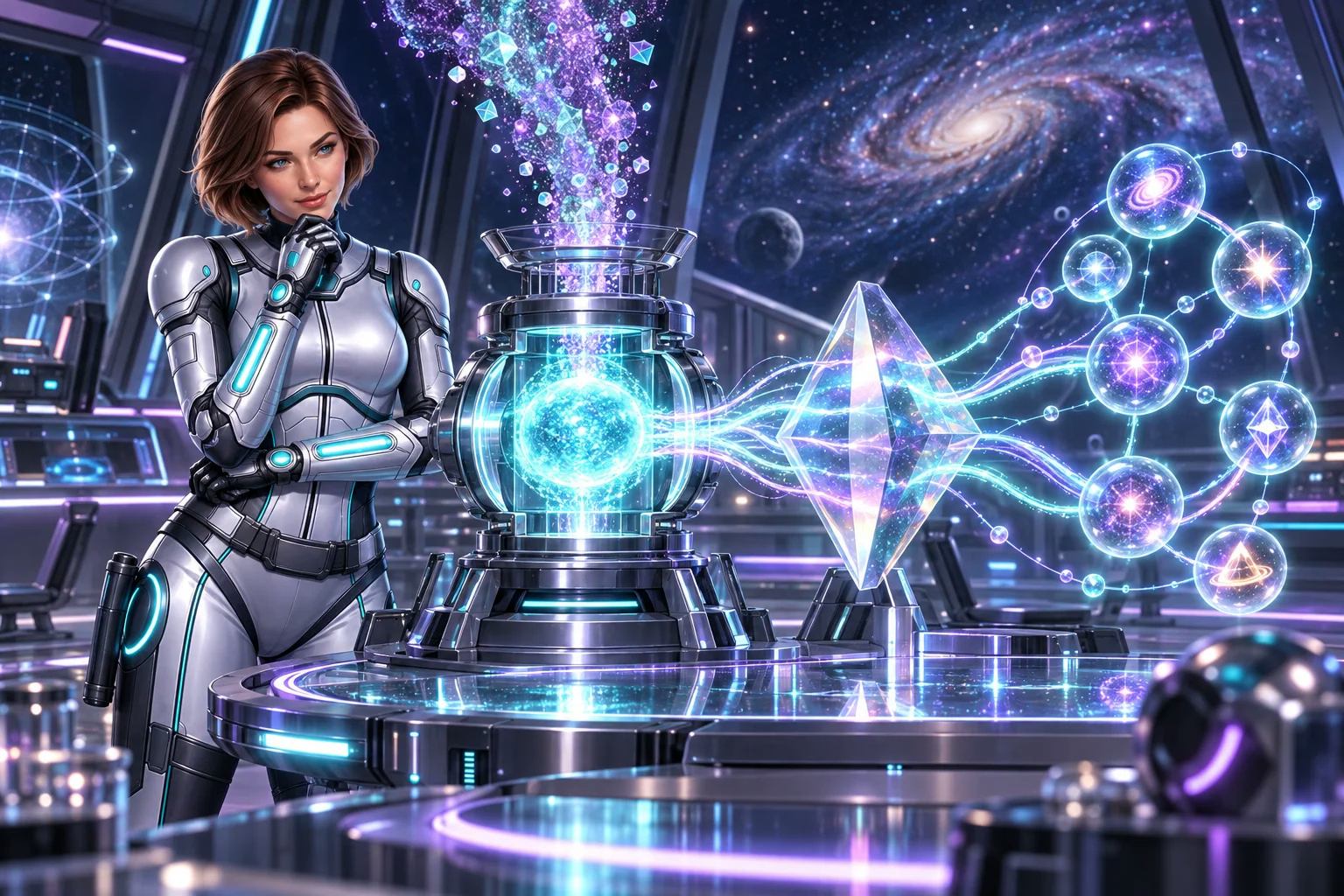
Near the Unmapped Quiet, I use my Vector Prism to project three separate layers: the raw sensor reading, my interpretation of it, and the route I propose. If the route is wrong, those layers help me find where the mistake entered.
Stacking everything into one image produces a magnificent map and a poor diagnosis. A game also has distinct layers: the RNG produces a value, the game math turns it into an event, and the screen presents the result. What appears on the screen is not the RNG itself.
Why Can Random Results Form a Streak?
Independent results do not change each other’s chances. If the odds stay the same, repeats, long gaps and streaks can still happen. Random results do not have to take turns or balance out in your session. [1]
In our made-up 70/30 example, event B still has a 30% chance after several A results, if each pick is independent. B is not “due.”
Some game features change as you play. For example, a draw that removes items after each pick has fewer items left next time. Read the game’s rules before you assume each result is independent. [1]
A short run of results cannot prove that a system is sound or faulty. If you spot a display or account error, save the game name, time and message. Ask support to check it. More play is not a test.
Does RNG Tell You a Game’s Odds?
No. Two games can use similar generators but have very different odds. The game math controls how values turn into events. [1]
Volatility describes how widely results can vary. Hit frequency tells you how often a set type of result occurs. Return to player, or RTP, is a long-run math measure. None promises what you will get in one session.
Our RTP, volatility and hit frequency guide explains those terms. Use the glossary for more short definitions.
What Should You Check in a Test Claim?
GLI-19 is a testing standard. It covers items such as code, number patterns, mapping and system controls. Linking to it does not prove that Win Bonanza or a named game has passed a test. [1]
For a specific claim, look for the product name and version, testing group, standard, date and what was tested. Check the tester’s record where you can. A test of one part does not cover every part of a site.
Tests can find some faults. Passing a set of number-pattern tests alone cannot prove everything about the system. [1]
Let the Facts Set the Next Step
I eventually discarded my original route and plotted another from the latest readings. The crew recovered from the loss of a very elegant line more quickly than I did.
Treat game history as a record, not a forecast. Read the rules of the game you choose, set a time limit that suits you, and use our player-safety options when you want a break. A recent streak does not chart the next result or give you a reason to stay longer.
Your Next Step
Learn what long-run figures can and cannot tell you about one session.
Frequently Asked Questions
- What does RNG mean in a casino-style game?
-
RNG means random number generator. It creates values that a game uses to choose results. The game’s own rules and design turn those values into symbols or other outcomes.
- Does a streak make a win due?
-
No. When results are independent and the odds stay the same, a streak does not change the next result’s chances. Past results are not a reason to extend your session.
- Can a game keep progress between rounds?
-
Some features can keep progress when the game rules say so. Read how that feature works. Saved progress is different from assuming a result is due because of a recent streak.
- Does a link to a testing standard prove a game was tested?
-
No. A standard describes requirements. To check a testing claim, look for the named product and version, testing group, date and scope of the test.
Sources
Sources checked September 8, 2026. Rules and offers can change. Open the links below to read the full details.
- GLI-19: Standards for Interactive Gaming Systems v3.0
General RNG, mapping, independent-result and test guidance; not a Win Bonanza test certificate. - NIST SP 800-90A Revision 1
How software generators produce random-bit sequences. - NIST SP 800-90B
Sources of uncertainty used to make random data. - NIST SP 800-90C
Ways to combine generators with sources of uncertainty. - Win Bonanza Player Safety Policy
Ways to get help or take a break.
FROM THE EDITORIAL DESK
Trust and Transparency
Written by Ella Hartly in the voice of Wren Brightstar, a Win Bonanza Crew character.
Ella Hartly built the Win Bonanza Crew around one idea: facts help more when people enjoy reading them. Her characters use stories and humor to make hard topics easier to follow. The facts about Win Bonanza come from the sources linked above.
Win Bonanza publishes these guides about our own service. The crew’s adventures are part of our story world and are entirely fictional. Ella Hartly is the real expert behind these characters, offering her insights and expert opinion.
Win Bonanza’s editorial process calls for checking sources, claims and links before publication and when rules change. Ella Hartly’s personal opinions and game preferences do not reflect the opinions of the brand Win Bonanza.