
Reading Options
These options change this article. You can also use your browser’s zoom.
GAMES · 8 MIN READ
Winlines Vs. Cluster Wins: What’s the Difference?
By Gigi Celeste Winlines & Cluster Wins

Quick Answers
- A winline checks symbols along a set path. A cluster win checks a connected group of matching symbols. The pattern matters, not just the total number of matches.
- Diamond Slam by Enjoy Gaming uses a 3 × 3 grid and five fixed winlines. Le Cowboy by Hacksaw Gaming uses cluster wins on a 6 × 5 grid, with regular symbol wins starting at five matches.
- In Le Cowboy, Super Cascades clear all regular symbols of a winning type before replacements drop in. Clearing a symbol is not the same as counting it in the original winning cluster.
From Gigi’s Preflight Notes
Two Maps, Two Useful Answers
During one memorably bumpy flight, Wren sent me a route around some damaged equipment. Sierra sent me a hazard map showing which pieces of debris belonged to the same group. Wren’s map told me which path to follow; Sierra’s told me what was connected. Same mess, two completely different questions.
I thought of both maps when I reached the black diamond in Diamond Slam. Its five fixed winlines are like Wren’s route: follow each path and check the symbols on it. Outside Smokey’s saloon in Le Cowboy, I needed Sierra’s kind of map instead: find the matching symbols that connect into a group.
That should have been simple. Then I noticed Smokey’s magnificent moustache, and my attention span rode off without me. Eyes on the pattern, Celeste.
A Path or a Group?
| What to check | Diamond Slam — Winlines | Le Cowboy — Cluster Wins |
|---|---|---|
| Provider | Enjoy Gaming. | Hacksaw Gaming. |
| Grid | 3 columns × 3 rows. | 6 columns × 5 rows. |
| Base-game pattern | Five fixed winlines; check the listed combinations on those paths. | Connected matching symbols; regular symbol wins start at five matches. |
| Feature to distinguish | Jackpot Slam collects tokens toward four jackpot meters. | Super Cascades clear all regular symbols of a winning type. |
The table compares the original games. Feature rules add to the base-game patterns described here. [2] [3]
Open a game from All Games and find its line map or cluster rules. Our online slots guide explains the other parts of the screen.
How a Winline Works
A winline is a predefined path used to check a symbol combination. In Diamond Slam, Enjoy Gaming puts five fixed winlines on a compact 3 × 3 grid. The familiar symbols include cherries, bells, BARs, and sevens. [2]
I start with the line map in the game’s rules. Then I compare the symbols occupying each listed path with the combinations in the win table. “Fixed” means the game supplies those five paths; I do not draw a new one around whichever symbols look promising.
Say I spot several bells in Diamond Slam. My first question is whether they occupy the required positions on a winline. Simply counting every bell on the board would skip the rule that makes this a line game.
The same goes for wilds: check which symbols they can replace and how the game evaluates the resulting line. A useful symbol still has to do its job in the right position.

How a Cluster Works
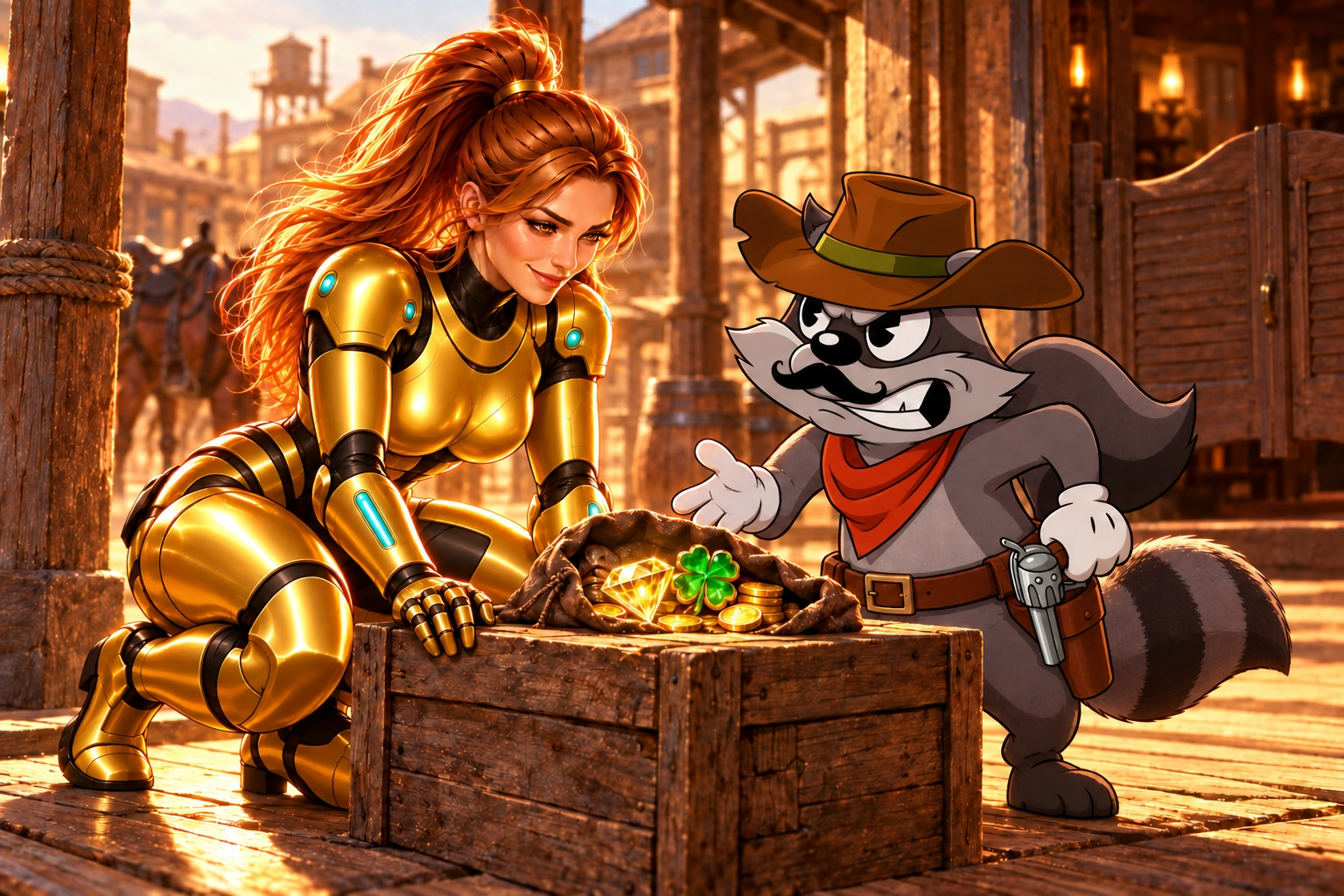
A cluster win comes from matching symbols that form a qualifying connected group. Le Cowboy gives Smokey a 6 × 5 board, and its regular symbol combinations start at five matches. Instead of checking five fixed paths, I follow the group and count its connected positions.
I start at one matching symbol and trace the contacts allowed by the game. Each position counts once. A matching symbol beyond a gap does not join the group just because it has the same picture. Nor can I add two disconnected groups together and call them one cluster.
The hat symbols make a useful example in Le Cowboy: a qualifying group of five matching hats meets the first regular-symbol count. Five hats scattered around the board are not automatically that group. Check the game’s connection rules before counting.
Hacksaw’s feature rules also explain what happens when a winning cluster includes a wild: that wild becomes a Revolver Cylinder. I’ll come back to that change below, because it is a separate step after identifying the cluster. [3]
Matching Symbols Are Only Part of the Answer
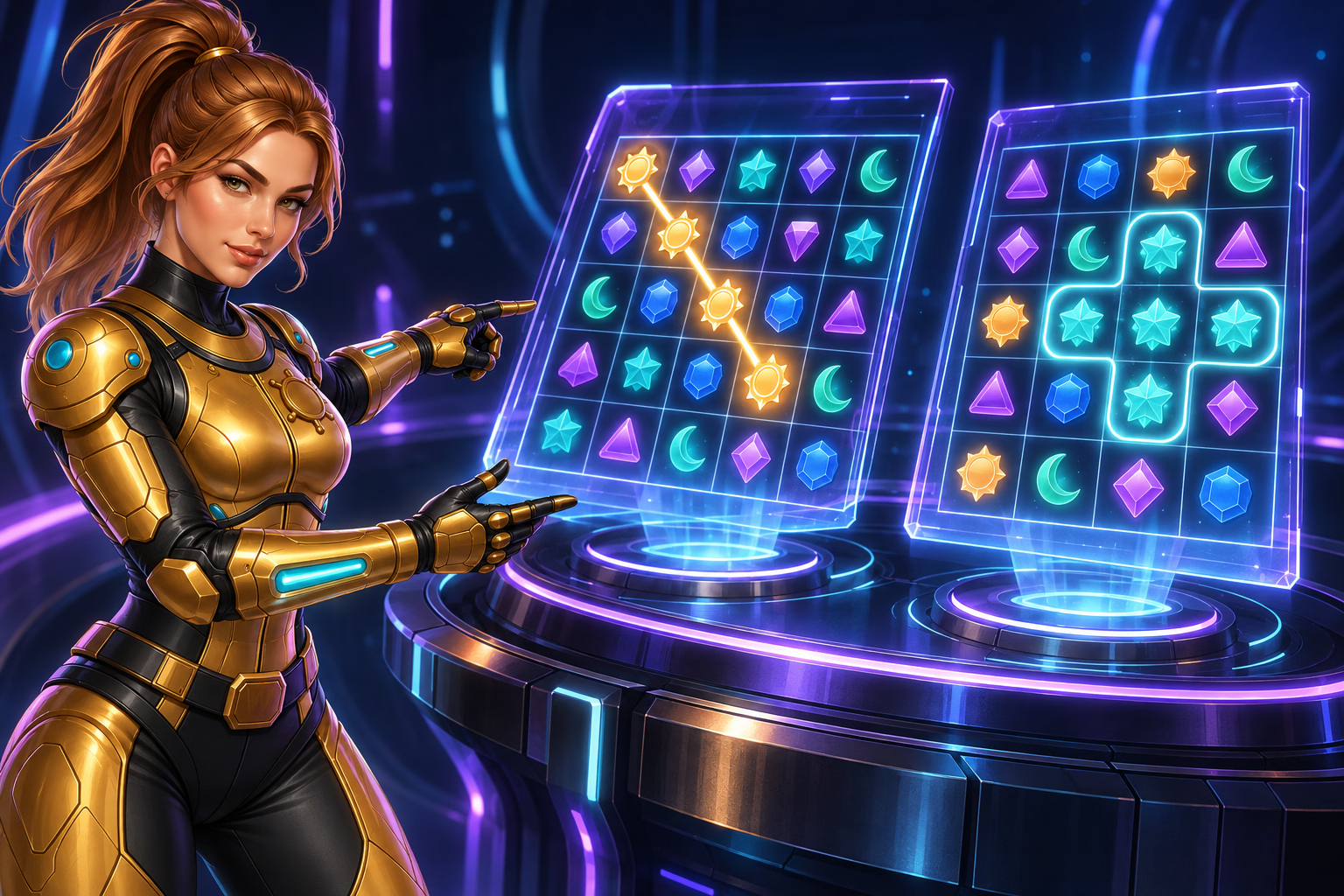
Here is the difference I watch for when moving between these games. In Diamond Slam, several matching regular symbols can be visible without occupying the positions needed on one of its five winlines. I check the path first, then the combination.
In Le Cowboy, five matching hats can form a qualifying connected group without following a predefined line across the board. But if those hats are split into separate groups, their total count alone does not make a five-symbol cluster.
One game asks, “Do the required symbols follow this path?” The other asks, “Which matching symbols belong to this connected group?”
Gigi’s Field Note
Ask the Map the Right Question
I nearly marched into Smokey’s saloon still searching for the five fixed paths from Diamond Slam. A very confident plan! Also a completely useless one, because Le Cowboy does not ask its matching symbols to follow those paths. It asks them to connect into a cluster.
That was when Wren’s route and Sierra’s hazard map finally clicked in my head. Before I count anything, I ask one question: am I checking a specific path or a connected group? Even Smokey paused his demonstration while I sorted that out. Either he was impressed or his moustache needed a rest.
A Cascade Is a Separate Rule
A cluster defines the winning group; a cascade changes the board afterward. Le Cowboy uses a particular version called Super Cascades. After a winning combination, every regular symbol of the winning type is removed from the board, and replacements drop into the empty positions. [3]
For example, if a hat cluster wins, other regular hat symbols elsewhere on the board also clear. Those extra hats did not have to belong to the original winning cluster. Their removal is part of Super Cascades, not proof that disconnected hats counted together.
I watch the changed board for the next evaluation. A cascade sequence can produce further combinations within the round, but a clearing animation does not guarantee another win. And falling symbols alone do not tell you whether a different game uses winlines or clusters.
Check What Features Change
In Diamond Slam, the five winlines describe its regular base-game combinations. Jackpot Slam adds a collection mechanic: Slam tokens build progress toward Mini, Minor, Major, or Grand. Its Free Spins mode uses Bonus and Jackpot Slam symbols. I read those feature rules separately instead of trying to explain every result with a line map. [2]
In Le Cowboy, a wild involved in a winning cluster changes into a Revolver Cylinder with two to six shots. It activates after wins and cascades settle, revealing special symbols at the positions it hits. Once transformed, that symbol is no longer wild. [3]
That is why I follow the sequence: identify the cluster, watch the cascades, then check Revolver Reveal. For a refresher on the different jobs symbols can do, see our special symbols guide.
Check Which Symbol Groups Count
-
Find the Rule
Open the five-line map in Diamond Slam, or check the cluster rules and minimum symbol count in Le Cowboy.
-
Follow the Pattern
Trace each listed winline, or follow the allowed connections within one matching group. Do not join disconnected symbols by eye.
-
Count the Symbols
Compare the result with the win table, including any wild substitutions. Then follow the separate instructions for cascades and special features.
I use this check before getting distracted by a glowing diamond or Smokey’s next flourish. The rules in the game you open decide which combinations count.
The Pattern Does Not Predict the Next Spin
An unfinished line or almost-connected cluster does not make the missing symbol due. If a meter saves progress, follow its written rule instead of guessing from past pictures.
Choose a pattern you find easy to follow. The label alone does not tell you its RTP, volatility, or hit frequency. Keep your own time and coin limits.
If a result looks wrong, save the game name, time, coin mode, and a screenshot. Check any available round details or ask Mission Control, our support team, to explain the recorded result.
Let Each Map Do Its Job
In Diamond Slam, I trace one of the five winlines and check whether the right symbols landed on that path. In Le Cowboy, I leave those lines behind and look for matching symbols that connect into a cluster. Once I stopped asking one game to follow the other game’s map, both became much easier to read.
Wren calls that choosing the right map. Sierra calls it what she told me from the beginning. I call it a beautiful moment of personal growth, and a much smoother landing.
Your Next Step
Ready to join me? Find Diamond Slam or Le Cowboy in the lobby, check its rules, and choose the game you’d like to play.
Frequently Asked Questions
- What is the difference between a winline and a cluster win?
-
A winline checks a combination along a predefined path, as in Diamond Slam. A cluster checks a connected group of matching symbols, as in Le Cowboy. Matching symbols must meet the game’s position and count rules.
- Do diagonal symbols count toward a cluster?
-
Only if that game’s rules allow them. Check which sides or corners must touch and how many matching symbols are needed.
- Does a cascade always use cluster wins?
-
No. A cascade changes the board after a result; a cluster defines which connected group counts. Le Cowboy combines cluster wins with Super Cascades, which remove all regular symbols of a winning type before replacements drop in.
- Can a win pattern predict the next spin?
-
No. A win pattern explains how a result is counted. It does not tell you what symbols will appear next.
Sources
Game examples updated September 28, 2026 using the provider descriptions below. Check the rules in the version you open for symbol values, connections, and feature details.
- Win Bonanza All Games
Browse our games and open each game’s own rules. - Enjoy Gaming: Diamond Slam
Official description of the 3 × 3 layout, five fixed winlines, Jackpot Slam, and Free Spins. - Hacksaw Gaming: Le Cowboy
Official descriptions of Super Cascades, Revolver Reveal, and special symbols. - Win Bonanza Sweepstakes Rules
How to get and use SC, who can play, and how prize requests work. - Win Bonanza Terms and Conditions
Rules for accounts, who can play, and special offers.
FROM THE EDITORIAL DESK
Trust and Transparency
Ella Hartly built the Win Bonanza Crew around one idea: facts help more when people enjoy reading them. Her characters use stories and humor to make hard topics easier to follow. The facts about Win Bonanza come from the sources linked above.
Win Bonanza publishes these guides about our own service. The crew’s adventures are part of our story world and are entirely fictional. Ella Hartly is the real expert behind these characters, offering her insights and expert opinion.
Win Bonanza’s editorial process calls for checking sources, claims and links before publication and when rules change. Ella Hartly’s personal opinions and game preferences do not reflect the opinions of the brand Win Bonanza.